
Tesla Model 3: Actuator - 5-Way Valve (RWD) (Remove and Replace)
Tesla Model 3 2017-2026 Service Manual / Thermal Management / Cooling System / Actuator - 5-Way Valve (RWD) (Remove and Replace)
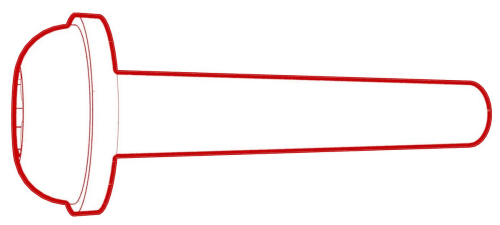
SPECIAL TOOLS
Wrench, Diverter Valve, Model 3 (1447556-00-A)
Remove
- Disconnect 12V power. See 12V Power (Disconnect and Connect).
- Remove the front aero shield. See Panel - Aero Shield - Front (Remove and Replace).
.png)
- From under the vehicle, disconnect the electrical harness from the 5-way valve actuator connector.
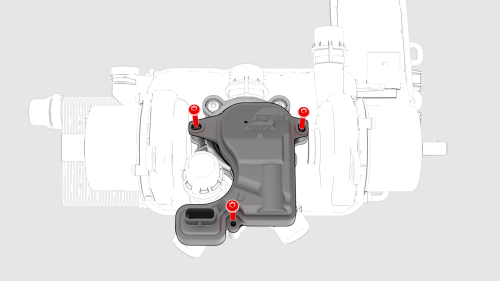
- Remove the screws that attach the 5-way valve actuator to the 5-way valve cover, and then remove the actuator from the valve cover.
Note: The end of the stem shell shaft is exposed.
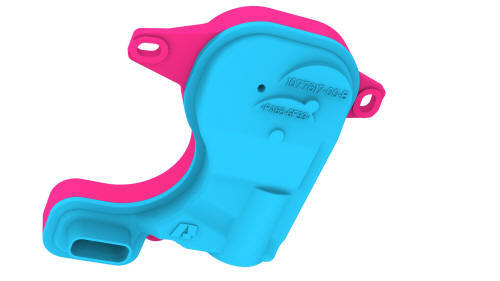
Install
- Examine the end the of the 5-way valve stem shell shaft. One shaft spline is slightly wider than the others.
- Mark the wider spline.
- Use the diverter valve wrench to align the 5-way valve stem shell shaft with the 5-way valve actuator for assembly.
Note: When properly aligned, the actuator easily slides over the stem shell shaft.
- Install the 5-way valve actuator on the 5-way valve cover, and then
install the screws that attach the actuator on the cover.
 Torque 2 Nm
 - Connect the electrical harness to the 5-way valve actuator connector.
- Install the front aero shield. See Panel - Aero Shield - Front (Remove and Replace).
- Connect 12V power. See 12V Power (Disconnect and Connect).
- Connect a laptop with Toolbox to the vehicle.
- Using Toolbox, run the 5-way valve actuator self-test, "TEST-SELF_VCFRONT_X_FIVE-WAY-VALVE."
Note: This Toolbox routine tests and calibrates the 5-way valve actuator.
- Disconnect the laptop from the vehicle.
READ NEXT:
 Coolant Pump - HV Battery (Remove and Replace)
Coolant Pump - HV Battery - Remove
Remove
Remove the underhood storage unit. See Underhood Storage Unit (Remove
and Replace).
Disconnect 12V power. See 12V Power (Disconnect and Connect).
Remo
SEE MORE:
Seal - Outer Belt - Front Door - LH (Remove and Replace)
Remove
Remove the LH front door trim panel. See
Panel - Door Trim - Front - LH (Remove and Install).
Pull up to release the seal that attaches the LH front door outer belt
seal to the front door, and then remove the seal from the door.
Install
Installation procedure is the revers
Lane Assist
The Autopilot cameras and ultrasonic sensors
monitor the markers on the lane you are
driving in as well as the areas surrounding
Model 3 for the presence of vehicles or other
objects.
When an object is detected in your blind spot
or close to the side of Model 3 (such as a
vehicle, guard rai
© 2019-2026 Copyright www.tmodel3.com
