
Tesla Model 3: Latch - Hood (Remove and Replace)
Tesla Model 3 2017-2026 Service Manual / Closures / Latches Strikers and Pinch Sensors / Latch - Hood (Remove and Replace)
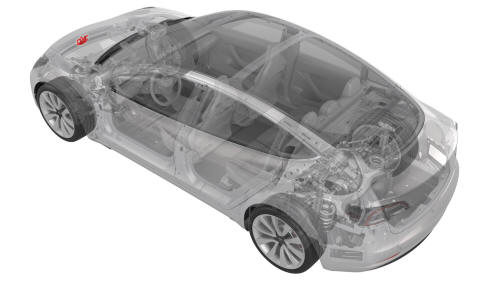
Remove
- Remove the rear underhood apron. See Underhood Apron - Rear (Remove and Replace).
- Remove the cabin intake duct. See Duct - Cabin Intake (Remove and Replace).
- Remove the hood latch cover. See Cover - Hood Latch (Remove and Replace).
- Remove the underhood storage unit. See Underhood Storage Unit (Remove and Replace).
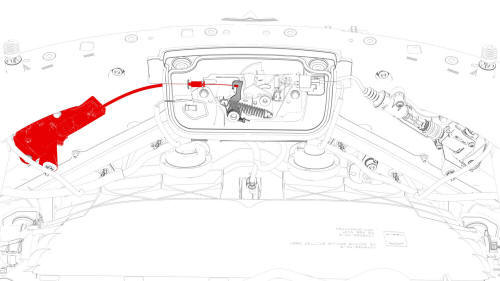
- Release the primary hood latch actuator cable from the hood latch.
Note: Release the clip before removing the primary latch actuator cable from the hood latch arm.
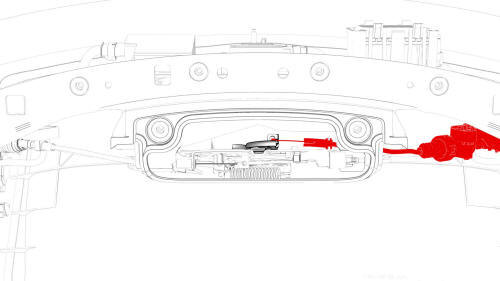
- Release the secondary hood latch actuator cable from the hood latch.
Note: Release the clip before removing the secondary latch actuator cable from the hood latch arm.
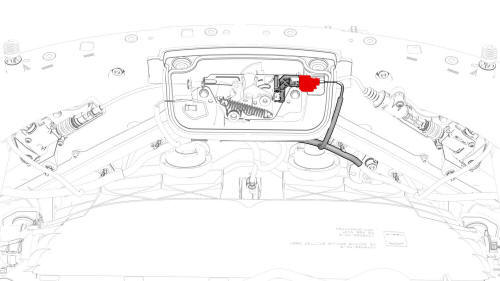
- Disconnect the electrical connector from the hood latch connector.
- Mark the location of the hood latch with masking tape.
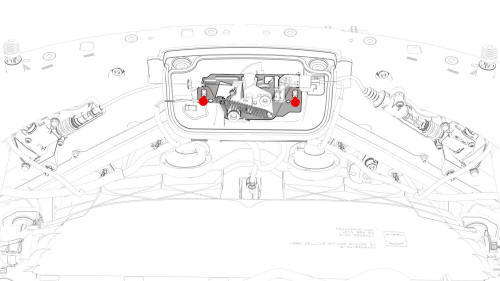
- Remove the bolts that attach the hood latch to the front end carrier,
and then remove the latch from the vehicle.
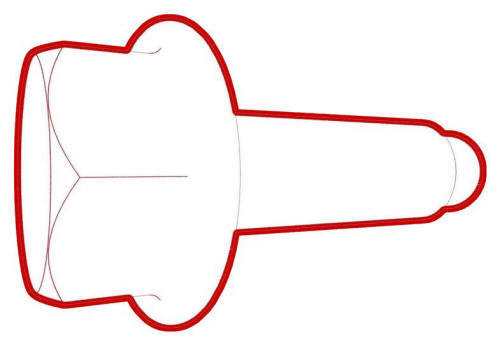 Torque 8 Nm
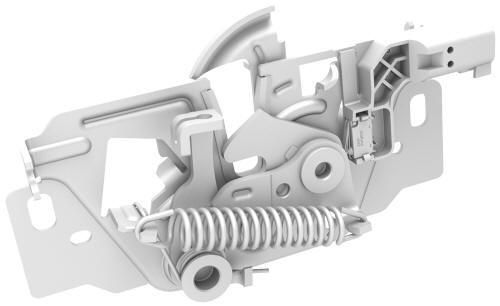
Install
Installation procedure is the reverse of removal.
READ NEXT:
 Latch - Trunk (Remove and Replace)
Remove
Remove the trunk lid trim. See Trim - Lid - Trunk (Remove and Replace).
Disconnect the electrical connector from the trunk latch.
Remove the bolts that attach the trunk latch to
Manual Release - Door - Rear - LH (Actuate)
Open Rear Door Using Manual Release Cable
Note: This procedure describes how to manually open the rear door
on a vehicle that does not have 12V power.
Remove the bolt that attaches the access
Striker - Door - Front - LH (Remove and Replace)
Remove
Open the LH front door.
Mark the position of the LH front door striker using masking tape.
Remove the bolts that attach the LH front door striker to the body, and
then remove the
SEE MORE:
Halfshaft - Rear Drive Unit - LH (Remove and
Replace)
Halfshaft - Rear Drive Unit - LH - Remove
SPECIAL TOOLS
Kit, EPB Release, Handheld (1134520-00-A)
XP-10 Power Supply, XP-10 (1129348-00-A)
Car Status
Overview
The touchscreen displays the status of Model
3 at all times. What you see depends on
whether the vehicle is:
Parked (shown below).
Driving
Charging
When Model 3 is parked, the status area
shows the gear, estimated range, and an
overhead view of the car with buttons you can
t
© 2019-2026 Copyright www.tmodel3.com
